Advisory · Delivery · Training
We don't promise revolutions.We deliver results.
We believe progress is a process, not a project. We assess your architecture and AI readiness before you approve the budget. We implement where it makes sense, and we leave the skills with your team.
30 minutes: your situation, possible directions, the next step.
- pro·to·pia/prəˈtoʊpiə/— noun
A state in which today is better than yesterday, if only slightly. Not utopia, not dystopia: continuous, incremental progress.
after Kevin Kelly, “The Inevitable”
A company that applies this principle to technology.
What we work on
Services and training for 96 organizations since 2019.
Banks, insurers, pharma, retail.

What we do
From the first decision to a working system, and beyond, until your team can run it on its own.
01 · Advisory
Not every technology decision should end in a change.
We help you make a decision, solve a problem, choose a direction or a technology, and review your environment: architecture, observability, GenAI, FinOps, Azure and Kubernetes.
We also support and mentor your teams on an ongoing basis.
We tell you what is right, not what you want to hear.
02 · Delivery
We build and extend agentic systems, GenAI solutions, APIs and AI Gateways, observability platforms, and applications and systems built from scratch, along with the Azure and Kubernetes environments they run on.
Not every project starts with a PoC; just as often, we extend or maintain what is already in place.
We work in stages and agree on each stage based on the results of the previous one.
We work in your environment, with your team or for you, all the way to production.
03 · Training
We teach what we implement ourselves: GenAI and AI in developer work, Azure, Kubernetes, observability and architecture.
We build the program around your team and its environment: 90% hands-on, from a few-hour workshop to a multi-day course.
Advisory
We check what a decision rests on before you turn it into a project.
Architecture review
Can your architecture carry your plans for the coming years? Where is the technical debt?
Applications, integrations, Azure and Kubernetes: the whole environment or a single system.
GenAI readiness
The pilot works, but nothing is in production?
We check data, security, processes and skills, and which GenAI use cases are justified and which are not.
Observability review
Monitoring is green, yet users report outages?
Metrics, logs and traces, the logging standard and the cost of collecting them, regardless of the tool.
Cloud costs and FinOps
Your cloud bill keeps growing and you don't know why?
Which decisions drive it, costs allocated to teams, whether reservations pay off, cloud or your own infrastructure.
Pre-migration review
Will the migration pay off, and what will go wrong?
Feasibility, cost and risk before you sign the contract, including whether you are better off staying where you are.
Vendor proposal assessment
An integrator sent you a proposal. Should you sign it?
An independent view: does the architecture address the problem, are the estimate and schedule realistic, what commitments will bind you for years.
Another problem
Your problem does not need a name from this list. Bring it to us. The conversation takes 30 minutes.
From the first conversation to the report walkthrough: usually 2–6 weeks. At the end, you get a risk map, decision options, a recommendation and a staged roadmap. Sometimes the recommendation is: change nothing.
Ad hoc advisory
One question, one decision. A few hours with our architect on your problem: a technology choice, an incident nobody can explain, a second opinion before you talk to a vendor.
Ongoing support and mentoring
For your team: an architect works with it on a regular schedule, with project and code reviews, decisions as they come up, and answers to questions before they become problems. Your team learns on its own system, not on training examples.
For your system: we look after its architecture and keep the direction of change, costs and risks under control from one release to the next.
Delivery
Nine types of projects we run today.
AI in the SDLC
Licenses bought, but no speed-up?
A tool alone speeds nothing up. We build coding agents into the whole process: from specification, through testing, to measuring the effect. We choose the tool to fit your company policies.
AI agents for business
Manual work on documents and data?
An agent for a specific task, for example:
- complaint handling
- draft emails to customers
- document processing
- knowledge base assistant
- business OSINT
- voice assistant
It works with your employee's permissions, and a person makes the decision.
AI platform and sandbox
Your teams are testing AI, but data must not leave?
A sandbox with access, network and cost control. We deploy test and production from the same code and log every model request.
API and AI Gateway
You don't know what APIs your company has?
A catalog, standards and a single entry point for teams, partners and AI agents (MCP). AI models behind the same gateway: limits, cost per team, logs.
Observability platform
You hear about outages from your customers?
Logs, metrics and traces in one place, on Grafana and OpenTelemetry. An AI agent (SRE) uses the same data to find the cause of an outage.
FinOps process
You have a cost report, but no savings?
Costs allocated to teams, policies, reservations and right-sizing built into the platform. We build the process, then help you run it or run it for you: regular reviews and adjustments, not one-off actions.
Azure
Your Azure grows faster than its rules?
Infrastructure as code: landing zone, hybrid networking with your data center, identity and policies. Applications on PaaS and serverless. Migrations to Azure and between regions.
Kubernetes platform
Every one of your teams deploys its own way?
A shared platform on AKS or on-premises: GitOps, networking, security. After launch, upgrades and maintenance.
Systems from scratch
No off-the-shelf product fits your process?
We design and build the whole system, on our own or together with your team: infrastructure as code, the application and CI/CD. After go-live, we hand it over to your team or maintain it for you.
Training
The five topics teams order most often.
AI in developer work
You have Copilot, but the team writes code the way it always has?
The team learns to work with a coding agent every day: how to give it project context, how to check its code with tests, how to build new features with it and find the cause of failures. Claude Code, OpenAI Codex, GitHub Copilot or open source, chosen to fit your company policies.
Architecture 101
Your team should design, not only implement?
For developers, DevOps engineers and seniors moving into architecture. Styles and patterns, security, networking, build vs buy, and whether you need Kubernetes at all. You design in groups in an architecture kata.
Observability
You have dashboards, yet finding a failure takes hours?
Metrics, logs and request traces in one place. You build a stack on OpenTelemetry and Grafana (Prometheus, Loki, Tempo), alerting without a flood of notifications, and profiling with eBPF, without expensive licenses.
GenAI and AI agents
Your team should build agents, not only use them?
An agent from scratch, without frameworks (Agentic AI the Hard Way), on OpenAI, Claude and other models. Agentic workflows, your own MCP server, GenAI applications with RAG.
Kubernetes
Your team is new to Kubernetes, or knows it inside out?
Introduction: Docker and Kubernetes for developers. Advanced level: Kubernetes the Hard Way, where everyone builds a cluster by hand, from certificates to networking, and tests failures. A separate AKS masterclass.
We also run other courses: Azure for administrators, developers and network engineers, DevOps and GitHub Actions, microservices, data modeling. We tailor the program to your team based on a survey or a conversation with the trainer before the start. Groups of 10–12 people, on-site or online. Don't see the topic you need? Write to us, and we will prepare a program for your team.
Open training
We run it under the Patoarchitekci brand. These are online sessions with dates on patoarchitekci.io that individuals sign up for, without ordering a program for the whole team.
OpenHack
A two- or three-day workshop in which participants work in groups to build a real solution: AI agents, applications on Azure, systems on Kubernetes. Trainers guide the groups through a series of tasks in an environment we prepare.
What clients say
“The workshop went exactly as I wanted: we went through the possible solutions, and although we did not end up with the one I wanted, we ended up with the right one. That is why I prefer working with your company.”
Daniel Nedzat KaliciDirector of InfoSec, Leapwork “I would like to warmly thank the Protopia team for the masterful design and implementation, for sharing a sea of knowledge and for the continuous support… I wish everyone such partners in adopting new technologies.”
Krzysztof RadzimowskiIT Delivery Manager, PZU “If we had to use just one word to describe Protopia, we would choose ‘progress’. Protopia helped us move our infrastructure to the cloud and became our guide, letting us stand firmly on the ground.”
Paweł ŻurekDirector of the Application and Infrastructure Maintenance Department, BIK “The training was well thought out, with general knowledge well balanced against exercises. We appreciated that the trainers incorporated details of our systems and focused on the elements of Docker and Kubernetes most appropriate for our scenarios.”
Sławomir KwasiborskiSoftware Solution Architect, Demant Technology Centre
The best team on the market*
* Every consulting firm says this, so the sentence alone proves nothing. The evidence is below: who the founders are and what they have been doing in public for years.
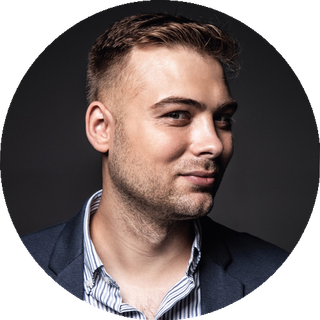
Łukasz Kałużny
Founder, Managing Partner, Technology Advisor
Microsoft MVP: Microsoft Foundry.
Łukasz Kałużny is a co-founder of Protopia. As Managing Partner and Technology Advisor, he advises companies on technology selection and IT strategy. He specializes in GenAI and AI agents, systems architecture, and Azure and Kubernetes environments. He has been a Microsoft MVP since 2012, currently in the Microsoft Foundry category and previously in Microsoft Azure. Since 2019 he has co-hosted Patoarchitekci with Szymon Warda, a Polish-language podcast on IT architecture. More than 200 episodes are publicly available, so you can hear how he approaches technology decisions before you meet.
Check for yourself: MVP profile, Patoarchitekci
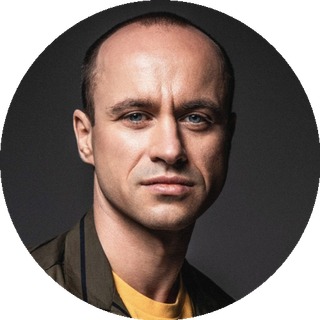
Szymon Warda
Founder, Managing Partner, Technology Advisor
Grafana Champion.
Szymon Warda is a co-founder of Protopia. As Managing Partner and Technology Advisor, he advises companies on technology selection and IT strategy. His work covers distributed systems that process large volumes of data, data modeling, and an evolutionary approach to architecture. He specializes in observability and FinOps: making sure teams can see what is happening in their systems and what it costs. He joined the Grafana Champions program in 2026. Together with Łukasz Kałużny, he has co-hosted the Patoarchitekci podcast on IT architecture since 2019.
Check for yourself: Grafana Champions list, Patoarchitekci
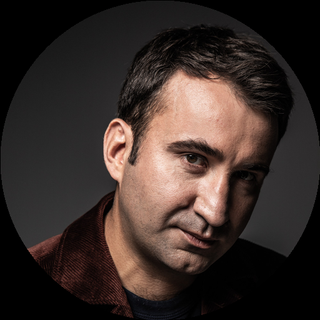
Marek Grabarz
Founder, Managing Partner, Technology Advisor
Microsoft MVP: Microsoft Azure.
Marek Grabarz is a co-founder of Protopia. As Managing Partner and Technology Advisor, he advises companies on technology selection and IT strategy. He specializes in API Management, systems integration, and secure AI adoption in regulated organizations, from a shared gateway for APIs and AI agents to access policies for models. He is a Microsoft MVP in the Microsoft Azure category. He runs the Warsaw Microsoft Azure User Group meetups and, on the Powered by Protopia podcast, talks with IT leaders about API Management, integrations and AI agents.
Check for yourself: MVP profile, Powered by Protopia
The first conversation

Mikołaj Szczerbicki, Head of Sales & Business Development, answers inquiries. He brings an experienced consultant to the first meeting, so you talk about what you need from the start.
You can check how we think before the meeting. More than 200 Patoarchitekci episodes and all Powered by Protopia episodes are public.
How we work
1. Conversation
30 minutes: what you need, possible directions, the next step. No sales pitch.
2. Proposal
In writing: scope, duration, outcome and the people who will do the work.
3. Work in stages
After each stage, you see the result and decide whether we continue.
4. What stays
The report, code and documentation in your repositories, and a team that knows how to maintain it.
We look at the whole
For us, architecture, infrastructure, code and security are one system, not four separate contracts. We represent your interests with vendors and with the teams responsible for individual parts. For the security department, we are a partner: we propose safeguards and standards ourselves instead of only responding to comments.
Vendor requirements
We work for banks, insurers and healthcare companies, so we know their vendor requirements from practice: NDAs, security questionnaires, data processing agreements, work in your accounts and subscriptions. Your data stays with you.
Technologies
This is what we work with every day, in production at our clients. Beyond Azure, we move freely across the whole CNCF ecosystem.
- AI and agents
- Microsoft Foundry · OpenAI · Anthropic · Microsoft Agent Framework · OpenAI Agents SDK · Model Context Protocol · Langfuse
- SDLC and quality
- Claude Code · OpenAI Codex · GitHub Copilot · SonarQube · Playwright
- Observability
- Grafana · Prometheus · Loki · Tempo · Mimir · Alloy · OpenTelemetry · eBPF · HolmesGPT
- APIs and integration
- Azure API Management · Azure API Center · Kafka · RabbitMQ
- Cloud
- Microsoft Azure · Azure Landing Zone · Well-Architected Framework · Cloud Adoption Framework
- Kubernetes and CNCF
- AKS · Rancher · Helm · Argo CD · Flux CD · KEDA · CloudNativePG
- DevOps and IaC
- GitHub Actions · Azure DevOps · Terraform · Bicep
- Security
- OWASP Top 10 · OWASP API Security Top 10 · OWASP Top 10 for LLM · CIS Benchmarks · Microsoft Cloud Security Benchmark · Kyverno · Trivy · Check Point · Palo Alto Networks · DevSecOps
- Databases
- PostgreSQL · Redis
- Languages
- C# / .NET · TypeScript · React · Python · Golang
- Practices
- DevOps · SRE · FinOps · GitOps · platform engineering · internal developer platform · spec-driven development · evolutionary architecture · technology radar · DORA metrics · microservices · modular monolith · asynchronous messaging
Podcasts
We talk in public about what we do every day: with engineers in one podcast, with leaders in the other.

Patoarchitekci
for engineers
Practitioners talking about IT architecture: cloud, Kubernetes, DevOps, AI. Specific and free of marketing.
Powered by Protopia
for leaders and managers
Managers' questions, answers from real deployments: AI agents, API Management, observability, FinOps, AI in the SDLC.
Questions
Do you only work on Azure?
Azure is our core competence. We also run application and AI agent projects on other clouds, and Kubernetes in clients' own data centers as well.
Where do we start, and how long does it take?
With a 30-minute conversation. A review usually takes 2–6 weeks, we split delivery into stages, and training takes from one day.
After the review, do we have to order the implementation from you?
No. You can implement the report and recommendation with us, with another vendor or with your own team.
What happens after go-live?
We hand the system over to your team or maintain it for you. You can also keep ongoing advisory support.
Do AI agents make sense in every company?
Not always in the form of an agent. AI usually adds value where someone works on documents, gathers data from several systems before a decision, or does research no one has time for today. Sometimes an assistant, search across company documents or classic automation works better. We help you find the tasks where AI pays off and choose the right solution for them. That is where the "GenAI readiness" review starts.
Contact
The first conversation takes 30 minutes. Mikołaj Szczerbicki and an experienced consultant take part. You tell us what you need; we tell you what we see and what the next step would be. After the conversation, you know whether and how we can help.
Mikołaj Szczerbicki, Head of Sales & Business Development
Prefer to write?
Briefly describe what you need. We usually reply within one business day.
Thanks, we have your message
We usually reply within one business day, most often Mikołaj himself. If it is urgent, call: +48 667 013 893.
Sending failed
The problem is on our side. Your message is still in the form. Try again in a moment or write to [email protected].