
When each AI agent is built separately, you have to set up the infrastructure, open network traffic and certify the environment all over again. A shared platform on Azure is approved for use once, and each new agent is deployed to it through CI/CD.
Articles
Episode summaries, lessons from projects and articles on what we implement: AI agents, APIs, observability, FinOps, Azure and Kubernetes.
Tag: choose
- AI agents
- AI agent platform
- API Management
- MCP
- hybrid model
- API Ops
- API security
- case study
- observability
- OpenTelemetry
- Grafana
- PoC
- FinOps
- cloud costs
- governance
- AI assistant
- prompt injection
- coding agents
- Spec Driven Development
- Azure
- landing zone
- agent orchestration
- AI sandbox
- Microsoft Foundry
- Kubernetes
- SRE
- eBPF
- AI Gateway
- API Center
- iPaaS
- Prometheus
- monitoring
- human in the loop
- AI Act
- SDLC
- DevOps
- knowledge base
- cloud migration
- Infrastructure as Code
- HR
- SLO
- Logic Apps
APIs and integrations
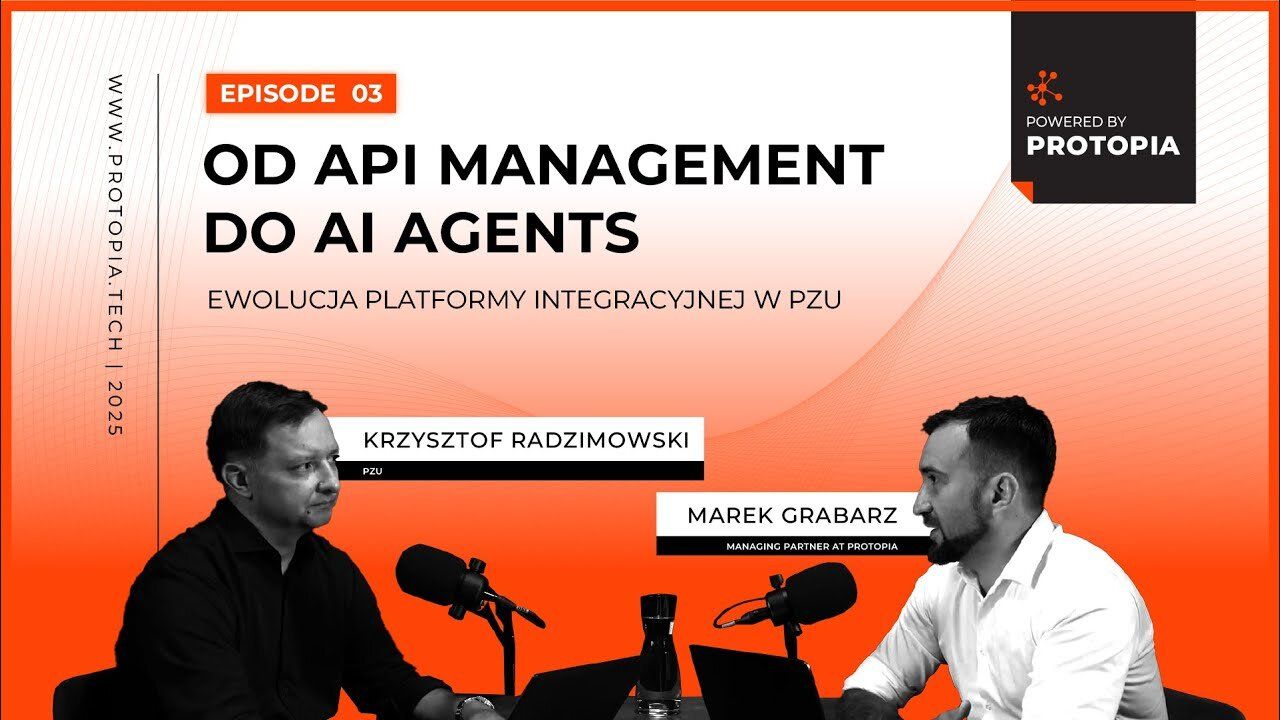
API Management at PZU: a shared gateway to its systems and a plan for AI agents
PZU operates in a regulated industry, is leaving its SOA platform and is planning for AI agents. It built a shared gateway on Azure API Management that developers use on their own.

When a company plans many AI agents, each team may integrate separately with the same systems. See when a shared API Management gateway makes sense and where its role ends.

Once the first AI agents are written in Python, the next question is the platform: a ready-made service or your own, how to connect company systems, and how to move an agent to production safely.